
PJ-DIVERS-01
PJ-DIVERS-01
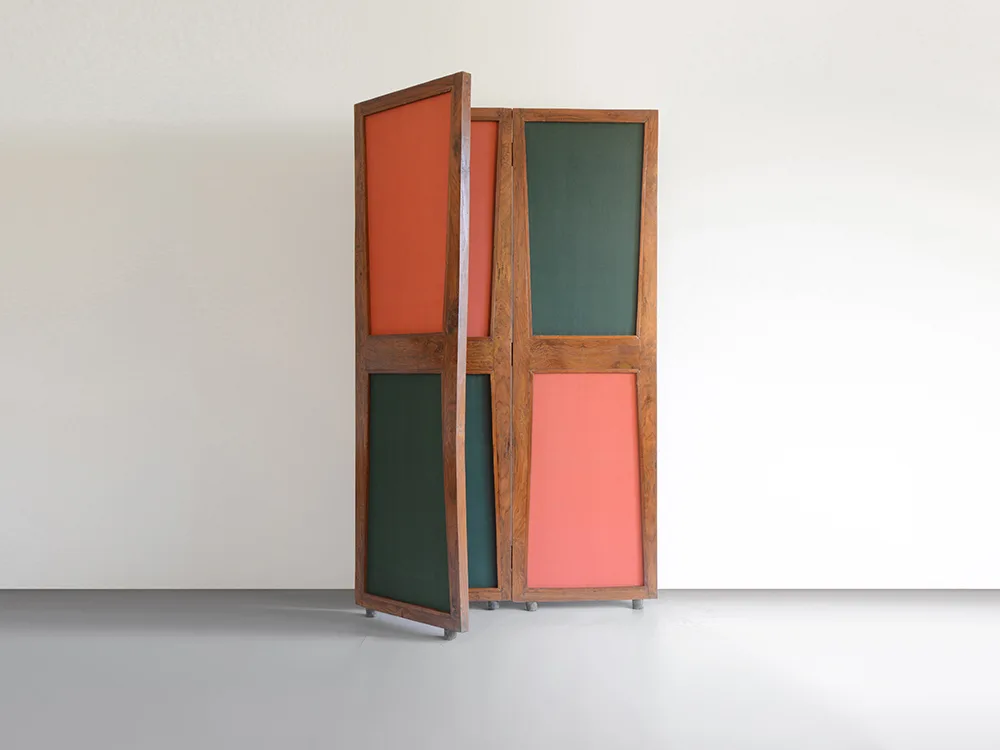
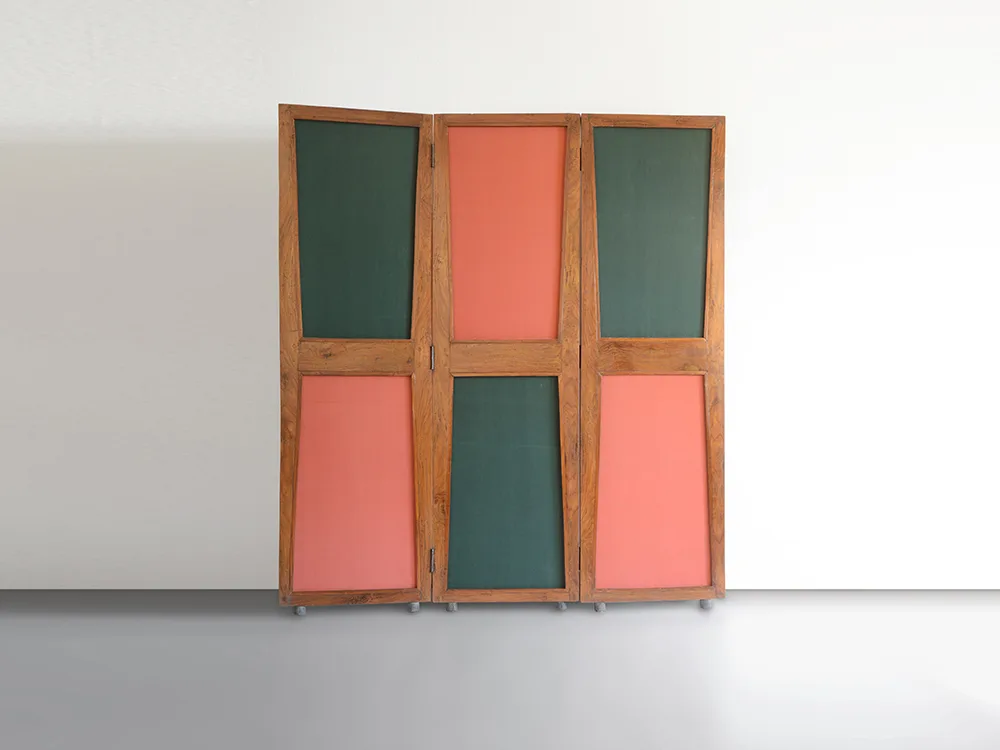
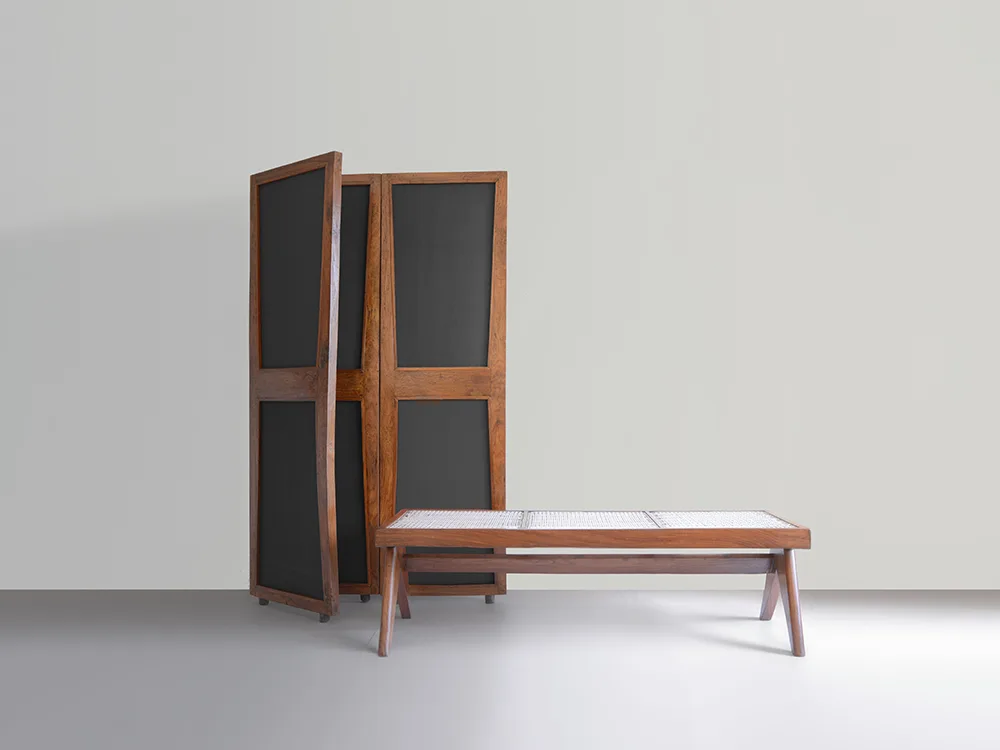
Paravent, conçu par Pierre Jeanneret, 1957-1958, pour le Secrétariat, l'Assemblée et divers bâtiments administratifs de Chandigarh. Trois panneaux articulés à double face forment six champs, garnis de toile de coton ou de moleskine. Le cadre de chaque panneau s'élargit légèrement vers le centre. Il repose directement au sol ou sur de légers patins en caoutchouc.Dimensions:
172 x 151 x 5 cmMatériaux:
Teck massif, coton vert foncé et rougeBibliographie :
1. Eric Touchaleaume et Gérald Moreau, Le Corbusier, Pierre Jeanneret : L’aventure indienne. Design, art, architecture (Montreuil : Gourcuff Gradenigo, 2010), p. 248, 597.2. Hélène Bauchet-Cauquil, Françoise-Claire Prodhon et Patrick Seguin, Le Corbusier, Pierre Jeanneret : Chandigarh, India, 1951–66 (Paris : Galerie Patrick Seguin, 2014), p. 136, 289.
Conditions:
Certificat d'authenticité inclusLivraison mondiale disponible
Politique de retour de 14 jours
Demandes:
Envoyer une demandescreen jeanneret
screen and a room divider made of teak and cotton. A rare screen from the collection of Chandigarh. A piece of furniture of great importance. It is a thing of everyday life. At auctions sold for a lot of money. It is as good as ever. A history of India shows an industrialization affecting the Punjab and North India. The Mogularchitecture and modern India met here and created a new capital. Much water, politics and creativity also made the city an architectural masterpiece. Nehru created a capitol and a culture of museums. An art collection was here and the rare gold and silver were here. Metals and concrete created a place of encounter. So was the pottery and the craft, where teak and metal came into being. Pipe braid and the magic of Le Corbusier and Pierre Jeanneret. The villa in Ahmedabad and the paintings were significant. In the period from 1950 to 1960 visions were important and life in the countryside was hard. The Romanticism of European Modernism has created modernist buildings of stone and clay. Fire and water were elements of peace, where the Parliament and the citizens wanted an architecture and its furnishing. The culture is something important.