
“OBJETS BRUTS”
The vast majority of the objects shown exhibit our focus on raw art. The search for the essence, where design is more than just decoration, is at the centre of such works. Objects by Pierre Jeanneret, Charlotte Perriand, Tom Strala, Le Corbusier, Gerrit Rietveld, and Jean Prouvé are fascinating as artefacts per se and move not only our intellects but also our individual archaic sensibilities. The book acts as an archive and presents the objects as artefacts, making clear that they are tools which offer extreme solutions and support the process of self-radicalisation of every individual. Such an archive is a tool against the mainstream.
Details
230 pages
English, Japanese
ISBN: 978-3-9526365-0-3
Available as PDF (29.2 MB)
“SELECTION OF MASTERPIECES”
Masterpieces are defined as outstanding and radical works with a special aura. Each selected artefact has specific design qualities and appears extreme. Each has a distinct place in design history. Some originate from Chandigarh, while others come, like Eileen Gray’s own Safari Chair, from elsewhere. Despite their different origins, they share a common drive: a pursuit of expression, a commitment to experimentation, and the ability to go beyond limits. This booklet shows a personal selection of masterpieces from the 20th and 21st centuries. Each object is shown with additional details and placed in the context of its time.
Details
34 pages
English
ISBN: 978-3-9526365-3-4
Available as PDF (18.0 MB)
GERRIT RIETVELD “OBJECTS OF RADICALISATION”
Rietveld worked in the realm beyond rational design. He was guided by the abstract, the cosmic, by ideas that existed beyond immediate perception. Through spatial constructs, he pursued the essence. The objects he created were not intended for practical use; they were gestures of intellectual rebellion, a response to the disorder that followed World War I. With his first architectural project, the Rietveld Schröder House, a love story and a cooperation with Truus Schröder began. Radicality found its expression in architecture and design. This publication documents a few artefacts that reveal his search for the essential and the uncompromising.
Details
13 pages
English-German
ISBN: 978-3-9526365-1-0
Available as PDF (8.9 MB)
“SWISS NON-CONFORMISTS”
This booklet challenges the dominant narrative of Swiss design as a discipline defined by moral correctness, objectivity, and the dogma of ‘good form’. By presenting radical, rebellious, and often overlooked works by key figures of Swiss design like Le Corbusier, Willy Guhl and contemporary designers like Tom Strala, it reveals a parallel movement. The selection exposes qualities long suppressed within the official canon: banality, nonchalance, and an archaic directness. The booklet argues for a reassessment of Swiss design identity, proposing ‘non-design’ as its most authentic contribution. It shows the items designed between 1918 and 2024.
Details
22 pages
English/German
ISBN: 978-3-9526365-2-7
Available as PDF (3.6 MB)
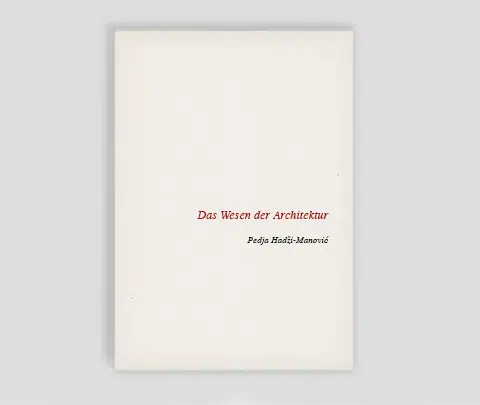
“The Essence of Architecture”
A critical evaluation of modern architecture. The question as to what establishes quality in a work reveals the limiting focus of our scientifically oriented criteria such as function, technology, materials or time. Architecture remains art, a medium whose perception also operates on the level of the unconscious. The instincts that a building can address, the awareness of one’s own impermanence, the belief in truth, or the yearning for ideals are of far greater importance than the aesthetic questions as to proportions or materials. This book critiques our dogmatic discourse and our failure to search for the qualities and relevant factors in architecture which go beyond just métier-relevant topics.
Details
132 pages
German, black and white
To be published at the end of 2028
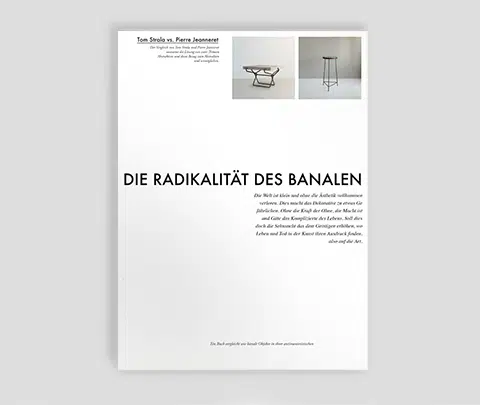
“The Radicalism of Banality”
Tom Strala vs. Pierre Jeanneret
A comparison of two artists. Their archetypal works show the search for what is essential. With their timeless artefacts, they ignore trends and the short-lived appeal of sensationalism. They love the radicalism of naked expression, and manage to coax the unnoticed depth out of that which is banal and raw. The pieces of furniture, far from relying on mannerist or genre-bound motifs, become concrete images of worldviews and existential sensations. Here we have neither the aesthetics of functionality nor objects that offer hiding places to intellectualised rhetoric: here, design becomes art. Nothing is added to the object; what remains is its presence.
Details
44 pages
English/German
26 photographs and 3 texts, 2024
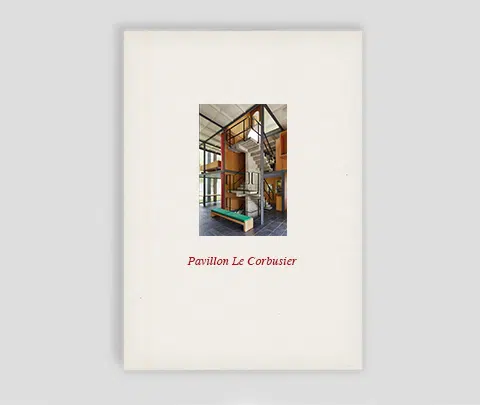
“The Le Corbusier Pavilion”
A volume of photographs of Le Corbusier’s last work, the Heidi Weber House. Though the building is of international importance, it has received little attention. The well-known photographer Lorenz Cugini has captured the complex spatial constellation in his own interpretation, creating images that do justice to this consummate architecture. The objectivist perspective makes possible a multi-layered reading, in which the viewer can open up either to the “architectural promenade”, to the complex configuration of the rooms, or to the shrewd detail solutions.
The photo-book approaches the work intuitively and avoids too much background information.
Details
44 pages
English/German
16 photographs and 3 texts
Limited edition signed by the photographer
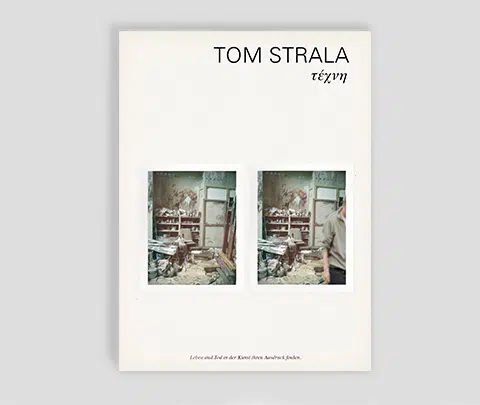
“TOM STRALA | TÉCHNE”
The Greek term téchne (art or craft) embraces the complete unity of art, intellect, and craft. This is an idea foreign to today’s industrial designers, who limit themselves to the actual design and leave production to the manufacturers. In contrast, the furniture designer/artist Tom Strala actually lives art/craft and seeks out the greatest possible engagement with his works. He makes them himself. As an artist Tom Strala transfers the power of his will to the work, and nourishes the object with his own self. The photo-book documents not only the creation of the “Bartok” object but also a rarely found creative intensity.
Details
48 pages
English/German
47 Polaroid reproductions, 2022
Limited edition signed by Tom Strala
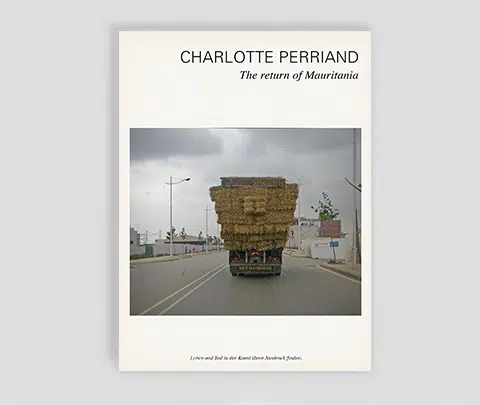
“CHARLOTTE PERRIAND | The Return of Mauritania”
Starting in 1958, in Cansado, on the coast of the then-French colony of Mauritania, a workers’ settlement came into being. In accordance with the Modernism of the time, the architect created a rationalist, idealist work. Charlotte Perriand designed furnishings that even today attract attention for their poetic simplicity. Since that time, most of the furniture has been either lost or sold.
The photographic work catches hold of the specific character of the locality and shows the encounter between European and Mauritanian culture. It presents not only the buildings but also everyday rural life in Mauritania and the changes now taking place there.
Details
64 pages
English/German, 2023
Limited edition signed by the photographer
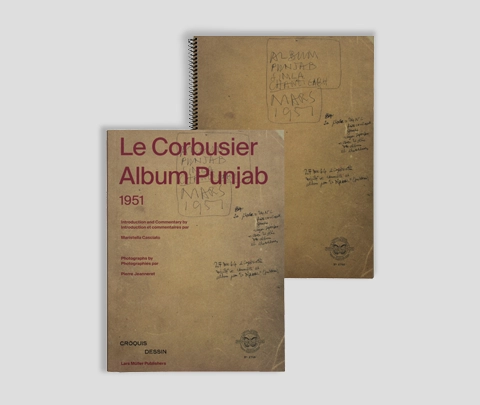
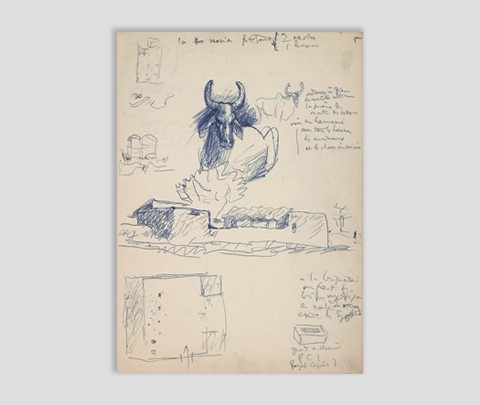
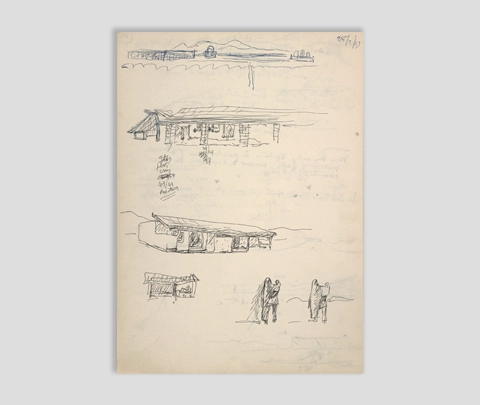
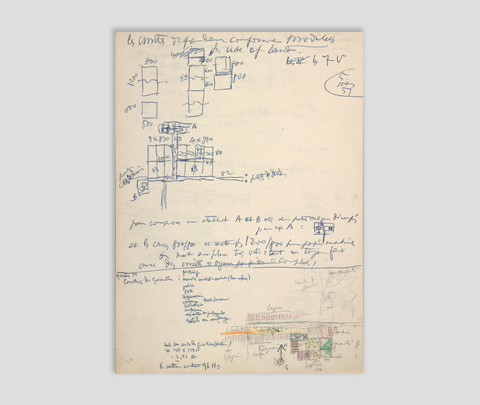
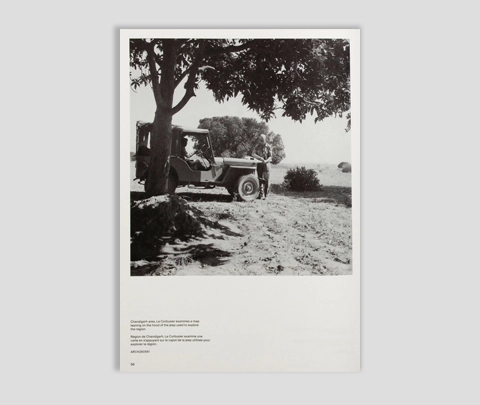
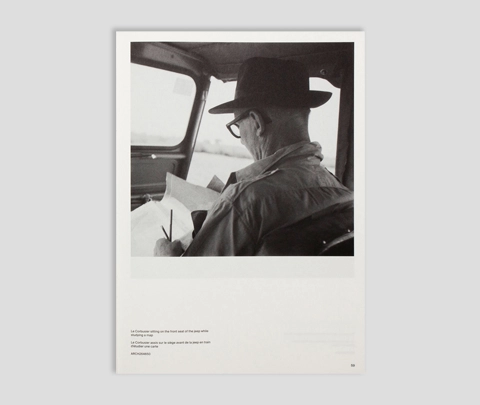
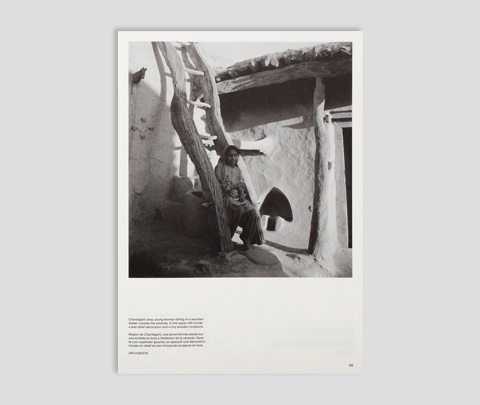
“LE CORBUSIER ALBUM PUNJAB, 1951”
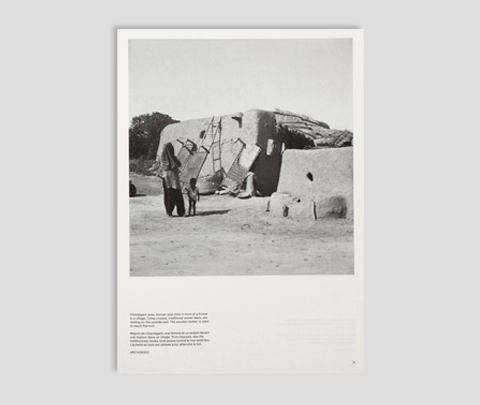
The set consists of a facsimile of the notebook kept by Le Corbusier and a volume of unpublished photographs by his cousin, Pierre Jeanneret. The notebook contains Le Corbusier’s sketched and written memos, notes, schematic drawings and personal reflections, made during meetings on his visit to the Indian state of Punjab. Its subject is the planning and construction of Chandigarh. It is a tool for reconstructing the topics that formed the basis of the Chandigarh plan in only a few days. The architectural historian Maristella Casciato comments on numerous subjects from the notebook. The handwriting is transcribed into French and English.
Details
208 pages
English/French
Lars Müller Publishers, 2024
70 Euro
Pierre jeanneret chair
pierre jeanneret sofa
P Galerie offers objects of Chandigarh. That makes it great for interior design also. We love design. Art is important for fashion and society. Also the great artists use that story. We have stools and furniture. All the design books about architecture and India. Authentic office cane chairs are essential for selling design. A house in the brutalist style can surprise us. A bridge sofa set is limited and a kangaroo easy chair is always in teak. That gives design importance. Even when we are in Zurich, we can be so clear what we offer. When Charlotte Perriand was in Japan she learned about oak wood and rosewood too. She adored also teak wood.Pierre Jeanneret design