

pierre jeanneret 1896–1967
Pierre Jeanneret was a Swiss architect who opened an atelier with his cousin, Le Corbusier. They designed some of the most famous buildings of the 20th century, such as the Villa Savoye and the Villa La Roche in Paris. Their cooperation ended with World War II.
In 1955 they united again to build Chandigarh in Punjab. Le Corbusier spent less time on the project, but Pierre Jeanneret continued to work on it for another 15 years.
character
Pierre Jeanneret worked in Le Corbusier’s shadow. However, his interests lay in experimentation rather than success. Chandigarh afforded him the opportunity to play, and to break away from European architectural dogma.
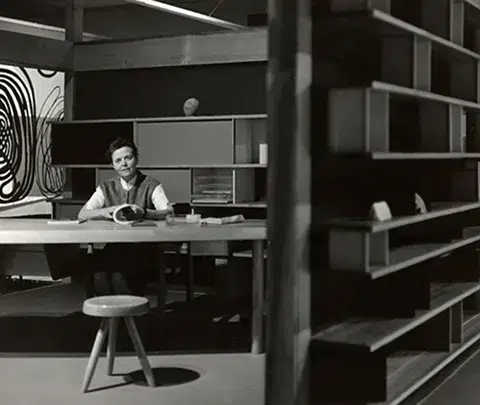
charlotte perriand 1904–1999
Perriand was a French architect and designer who worked for Le Corbusier and is known for designing the studio’s famous tubular steel furniture. She left Le Corbusier’s practice in 1937 and began collaborating with Jean Prouvé in 1940.
Around that time she travelled to Japan, where she began to explore the country’s rich culture of handicrafts. It inspired her to use more wood in her work and to develop a more subtle language.
character
Perriand was a free-spirited leftist who, in her search for individual expression, abandoned traditional architectural doctrine for a more emotional and poetic language. Designing was a game for her, but one to be taken seriously, and it shows a more feminine approach, based neither on ego nor the need for fame.
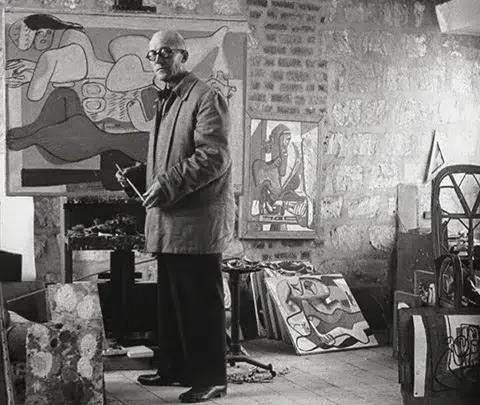
le corbusier 1887–1965
The most important architect of the 20th century, Le Corbusier developed his own innovative and playful interpretation of rational modernism. His famous definition of architecture as a ‘machine for living’ suggests his approach to design was highly pragmatic, but he was also an artist who believed that buildings should touch our souls.
His concept of the ‘promenade architecturale’, for example, was based on the belief that buildings should provoke multiple emotions and experiences. He planned the city of Chandigarh from 1951.
character
He was very ambitious and wanted to build. Yet the desire for fame did not mar his way of designing. He imbued his buildings with a deeper meaning. His work expressed a rich ambivalence between the rational and spiritual.
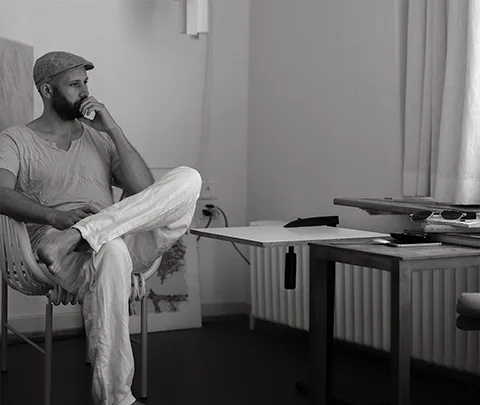
tom strala b. 1974
From an early stage in his career, the Swiss designer Tom Strala has worked in an experimental mode, avoiding both industrial and mass production. Design for him is both an art and a way of interpreting thoughts and ideas. He makes his objects himself, as artist and craftsman.
Rather than a mere response to economic need or the general zeitgeist, he seeks out radical design solutions that express his world view and that are often based on contradictions, such as roughness and fragility.
character
It bothers him that design is rarely radical. To him, furniture doesn’t have to act like a consumer good just because it is a utilitarian object. As a designer he expresses freedom and loves to reflect all facets of this existential topic.
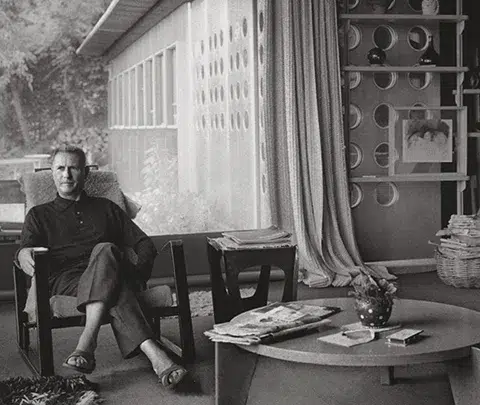
jean prouvé 1901–1984
Jean Prouvé was a French self-taught architect, designer and metalworker who was fascinated by the aesthetics of technology. He cooperated with Le Corbusier on architecture, and with Pierre Jeanneret and Charlotte Perriand on furniture.
After World War II, when France needed many new buildings, he looked for intelligent, low-cost solutions that could be mass produced. While pragmatic ideas and design solutions were important, his designs were often poetic and artistic in character. In 1944 he became mayor of Nancy.
character
Jean Prouvé sought beauty in the banal. He thus developed an anti-aesthetic aesthetic in all his utilitarian objects. He knew how to show that poor materials can enrich a design.
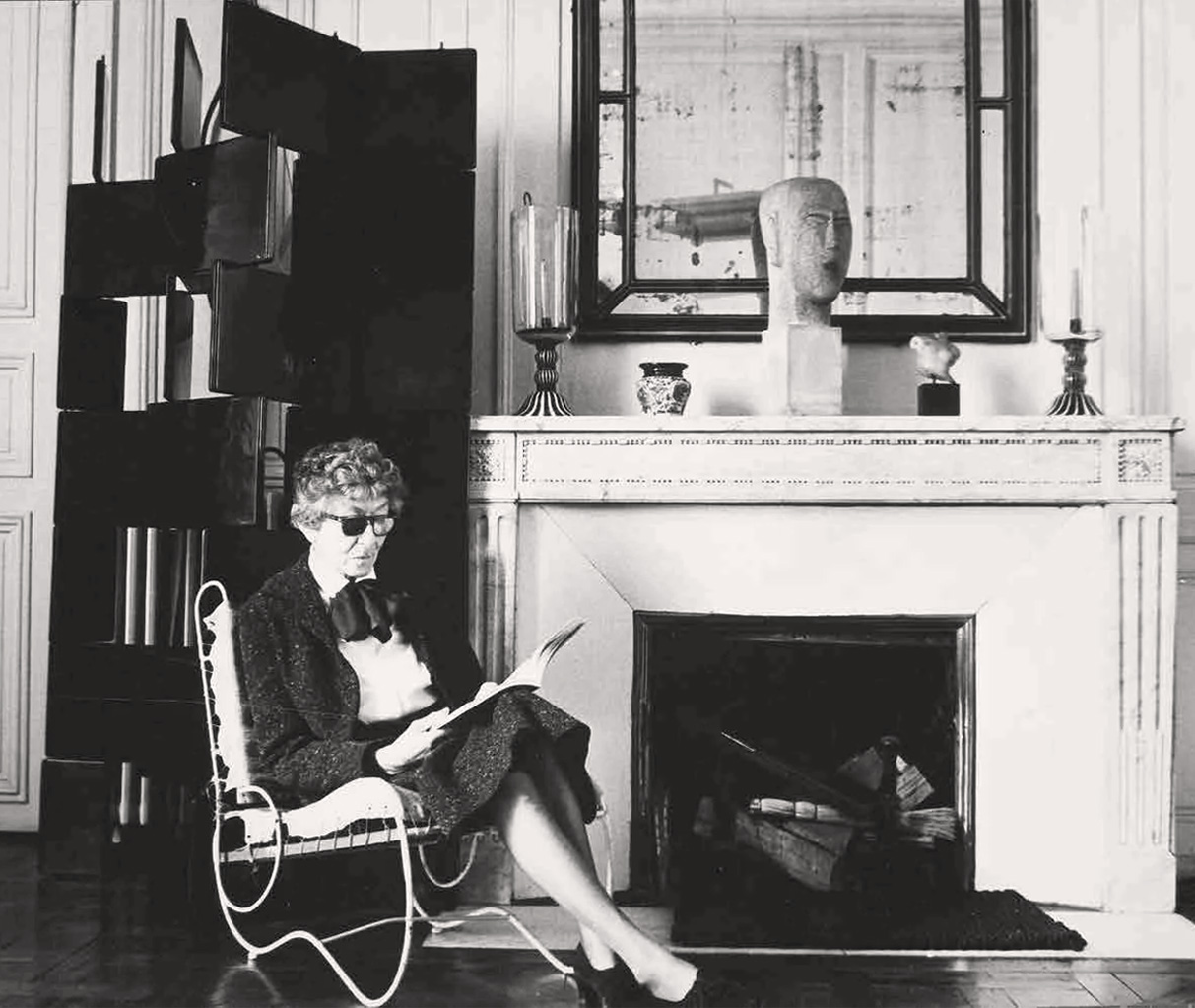
eileen gray 1878–1976
The Scottish-Irish architect and designer, descended from the aristocracy, is recognised as an icon of modernism. Her designs for furniture and buildings evoke playful apparatuses and machines. She asserted her position in the male-dominated world of architecture and design.
Nevertheless, she did not achieve the recognition she deserved until after her death. In 1926, she realised one of the most important architectural works of the 20th century, Villa E-1027.
character
Gray was a non-conformist and did not care much about society’s traditions. She spent her time in Parisian bars, dressed as a man with her girlfriend, absorbing the spirit of the 1920s. “To create, one must first question everything.” – Eileen Gray.
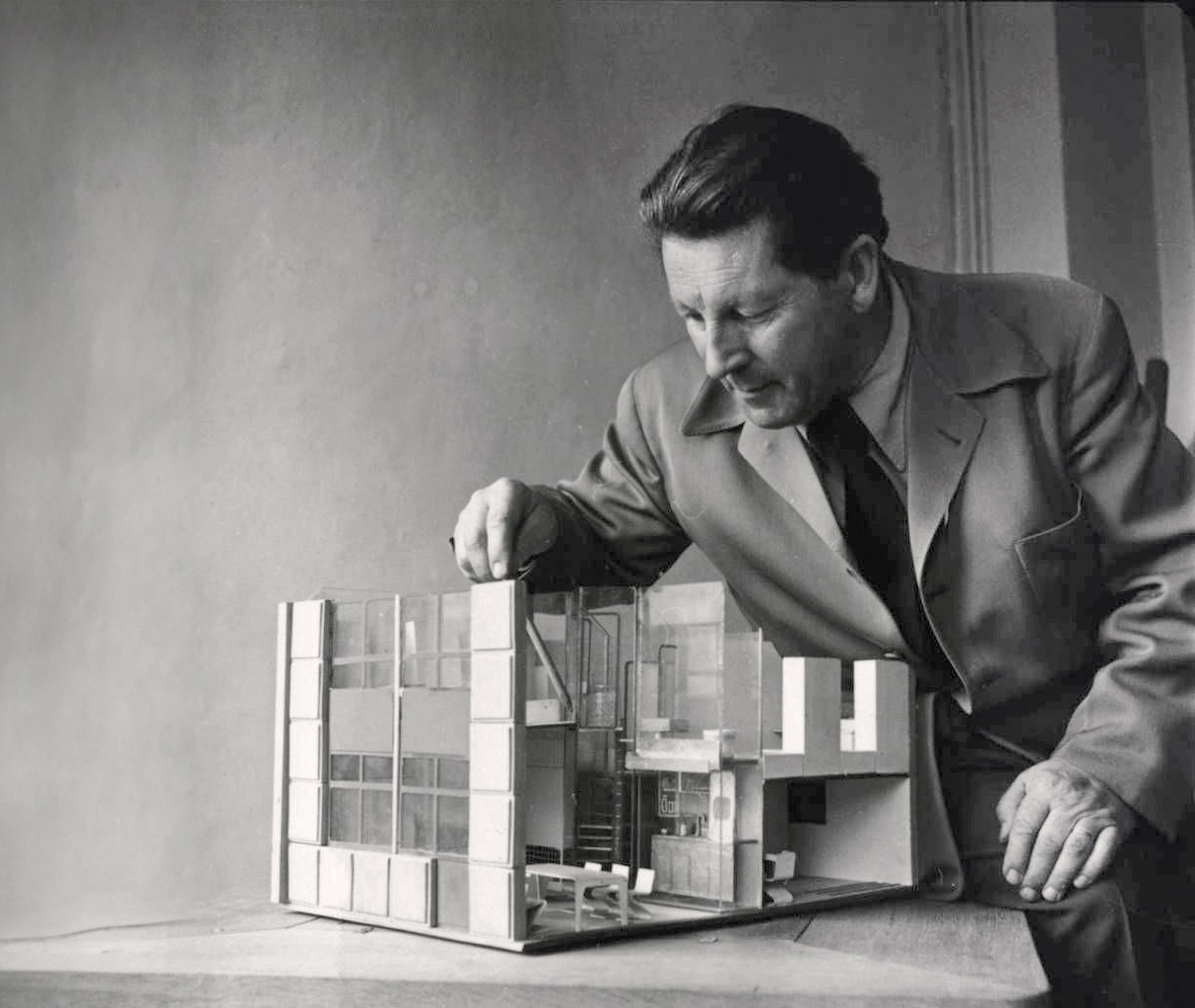
gerrit rietveld 1888–1964
The Dutch architect and designer was a member of the artists’ group “De Stijl” and one of the most radical designers of the 20th century. He completed a carpentry apprenticeship with his father and founded his own furniture studio in 1917.
In 1919, he designed the famous “Red and Blue Chair”, reduced to a simple geometric structure. His creations combined fine art, design, and architecture.
character
Rietveld was convinced that the strictly composed, precise geometry and open structure of his furniture would be universal. After the occupation of the Netherlands he was barred from his profession for his anti-Nazi stance. Allegedly a communist, he received no support after the war.
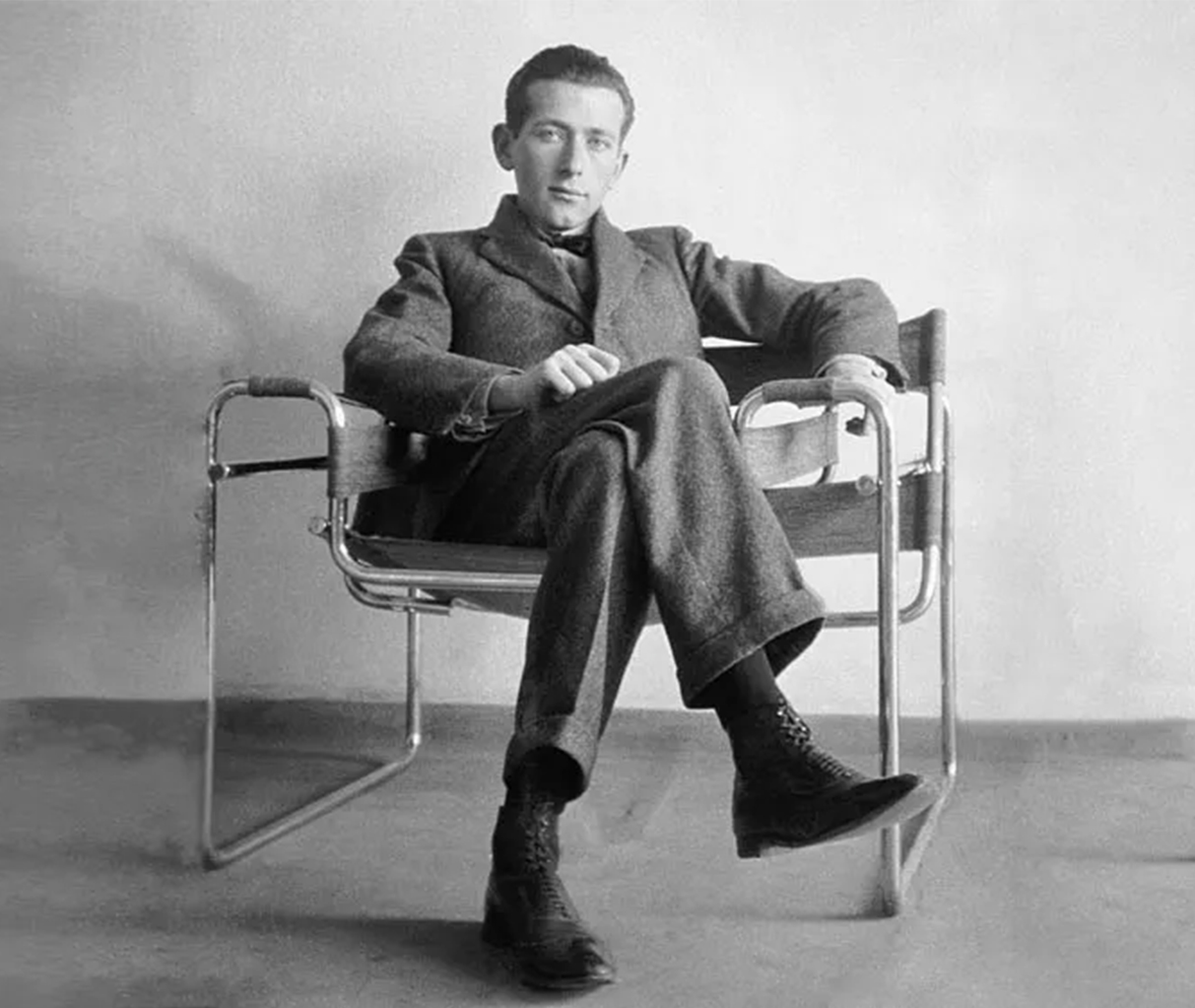
marcel breuer 1902–1981
Marcel Breuer, from Hungary, is known as a groundbreaking designer and regarded as one of the most important architects of the post-war period. He studied at the Bauhaus in Weimar and taught in Dessau.
His dynamic shapes and lines rejected strict modernist dogmas and created a new sense of uniqueness. For his famous free-swinging models, he first bent and welded steel tubes around 1925. He designed the Wassily Chair for Kandinsky.
character
As Marcel Breuer felt uncomfortable with cold steel, all parts touching the user were supplemented with warmer, organic materials such as leather, cotton, wickerwork, and wood. He took a visionary approach to ergonomics, with the human being at the centre.
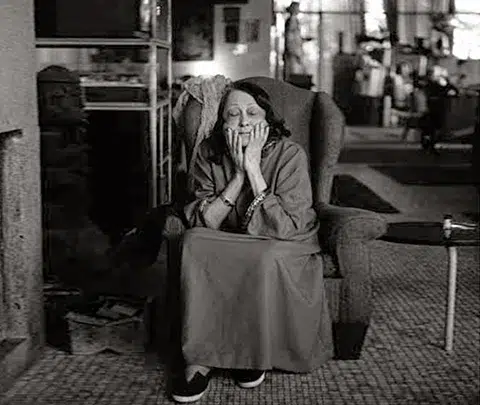
lina bo bardi 1914–1992
An Italian-born architect who spent much of her life in Brazil, Lina Bo Bardi initially worked for the architect and designer Gio Ponti, in Milan. After World War II she left with her husband for a new life in São Paulo, where they soon were absorbed into artistic and intellectual circles.
Her early work was quite modernist in style; however, the ethnic and emotional elements of Brazilian architecture and life gradually came to influence her thinking. Much of her design work was experimental as well as spiritual in character, and included both simple houses and large-scale concrete Brutalist buildings. Her best-known works are MASP and SESC Pompéia.
character
She was a communist, but remained bourgeois. Full of contradictions, she found her own aesthetic and its freedom.
Pierre Jeanneret and the radical designers around Le Corbusier: Perriand, Prouvé, Rietveld, Breuer, Gray, Niemeyer, Strala
P! Galerie in Zurich shows original Pierre Jeanneret chair furniture from Chandigarh, made between 1951 and 1965: the Office Cane Chair PJ-SI-28, the Kangaroo Chair PJ-SI-59, the easy chair PJ-SI-29, the cane bench PJ-SI-33, the Clerk’s Desk PJ-BU-02 and file racks.[7] More on the architect: Pierre Jeanneret.
Around these pieces the gallery places the work of designers who developed furniture from the conditions in which it had to exist, in different decades and countries: Charlotte Perriand (Nuage wall shelf, Forme Libre table), Jean Prouvé (Scal 450 daybed), Gerrit Rietveld (Red and Blue Chair, Elling sideboard), Marcel Breuer (slat chair TI-1a), Eileen Gray, Oscar Niemeyer (Alta lounge chair, Paris 1970) and the Swiss designer Tom Strala (floor lamp Pompidu 2, New York Times Table).
Furniture derived from material, construction and use
Radical means, in the literal sense, going back to the root, and the root is what these pieces have in common. Rietveld’s Red and Blue Chair consists of a frame of thin rods, joined without visible joinery, which carries two flat planes for seat and back.[4]
Breuer built the slat chair in the Bauhaus in Weimar between 1922 and 1924 with a rigid wooden frame, and the spring of seat and back comes from tensioned webbing woven in cooperation with the Bauhaus weaving workshop.
Prouvé was trained as a metalworker, and after the war he looked for low-cost solutions that could be mass produced, because his ambition was to create products for the greatest number of people possible.[3]
In Chandigarh, Jeanneret worked with Indian teak, sissoo and cane, with the joinery of the government workshops and with local timber dimensions, which allowed each piece to be repaired without imported parts.[6][7] Tom Strala, born in 1974, applies the same procedure to other materials: a sofa whose seat consists of cords, a coffee table cast in concrete, a lamp whose line is held by its own weight.[9]
In every one of these cases the form follows from material, construction and use, and ornament plays no part in the argument.
The object as a record of its use
A piece made in this way records how it was used. A Chandigarh chair stood for decades in a court, a ministry or a college, and its worn edges and old repairs document the institutions it served.
This is also the reason why the furniture belongs to the history of the city. Nehru wanted Chandigarh to be a symbol of the nation’s faith in the future, unfettered by the traditions of the past, and the furniture programme was part of this task.[6]
From the object to the house
Gray and Perriand applied the same procedure to the dwelling as a whole. Gray designed the house E-1027 together with its furniture in the 1920s.[8] Perriand joined the Le Corbusier office in 1927 at the age of 24 and developed equipment for living there; her later work in the Alps is treated in the McLeod volume under the title “Perriand and the Alps: Skiing for the Masses”.[1][2]
Dissent and its consequences
These designers did not work in agreement with the rules of their time, and several of them paid for it. Jeanneret left occupied Paris in 1940 to join a Resistance unit in Grenoble together with Georges Blanchon and Jean Prouvé, which suspended his collaboration with Le Corbusier until 1950, whereas Le Corbusier worked with the Vichy government.
Prouvé was made mayor of Nancy after the liberation, from September 1944 to May 1945.[3]
Rietveld refused to register with the Dutch Culture Chamber under the occupation, could no longer work as an architect and produced false identity cards. After the war a minister refused to appoint him head of a school, in spite of a letter of support from 26 prominent Dutch people, probably for political reasons.[4]
Perriand belonged to the Association des Écrivains et Artistes Révolutionnaires from 1932 and travelled to the Soviet Union.[2] Niemeyer went into exile in France in the 1960s and designed there the headquarters of the Parti communiste français, whose curtain wall was made by Prouvé.[5]
The convictions take different forms in these biographies, and in each of them they go together with the view that furniture and buildings should serve many users.
Mid-century, Brutalist and raw design for collectors: all objects, catalogues as PDF (Objets Bruts, Masterpieces, Gerrit Rietveld, Swiss Non-Conformists). Showroom in Dietikon near Zurich, partner galleries in Tokyo (Galerie Page) and Monterrey.
Literature
1. Charlotte Perriand, A Life of Creation: An Autobiography (New York: Monacelli Press, 2003).
2. Mary McLeod, ed., Charlotte Perriand: An Art of Living (New York: Harry N. Abrams, 2003).
3. Peter Sulzer, Jean Prouvé: Œuvre complète / Complete Works, 4 vols. (Basel: Birkhäuser, 1999 to 2008).
4. Ida van Zijl, Gerrit Rietveld (London: Phaidon, 2010); Marijke Küper and Ida van Zijl, Gerrit Th. Rietveld 1888–1964: Het volledige werk (Utrecht: Centraal Museum, 1992).
5. Styliane Philippou, Oscar Niemeyer: Curves of Irreverence (New Haven: Yale University Press, 2008).
6. Vikramaditya Prakash, Chandigarh’s Le Corbusier: The Struggle for Modernity in Postcolonial India (Seattle: University of Washington Press, 2002).
7. Eric Touchaleaume and Gérald Moreau, Le Corbusier, Pierre Jeanneret: The Indian Adventure. Design, Art, Architecture (Montreuil: Gourcuff Gradenigo, 2010).
8. Peter Adam, Eileen Gray: Architect/Designer (New York: Harry N. Abrams, 2000).
9. Max Bill, “Die gute Form,” Das Werk, 1949, issue 4; exhibition “CH-DSGN – The Swiss Non-Conformists,” National Museum of the Sultanate of Oman, 1 February to 22 July 2023, curator P! Galerie | Pedja Hadži-Manović.