
Archives

December, 2025
Design and Chandigarh Objects – Investment Potential for 2026

Design and Chandigarh Objects – Investment Potential for 2026

2020 to 2025: The Market Under Stress Test
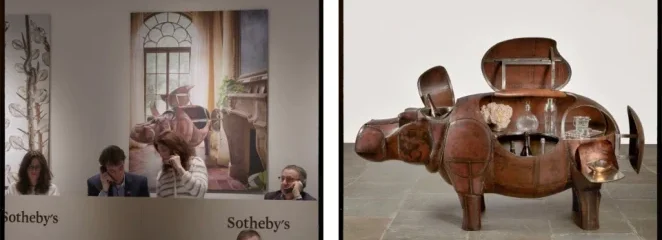
The Covid years 2020 and 2021 were generally difficult for the art trade. Without exhibitions and fairs, trade nearly came to a standstill. Traditional art galleries without an online presence suffered more than digitalized houses.

Design furniture galleries with an online presence, however, experienced demand: collectors who were now stuck at home invested in upgrading their homes. The second crisis lasted from 2022 to 2025: inflation, recession fears, geopolitical tensions, and trade wars led to a hesitant buyer base.

Globally, the art trade fell by 12% in 2024, and the auction market collapsed by 7% in the first half of 2025.¹ Revenue drops by major players such as Hauser & Wirth by 50% are cause for concern.²
Pierre Jeanneret: The Transformation and the Classification of His Work

Pierre Jeanneret: The Transformation and the Classification of His Work

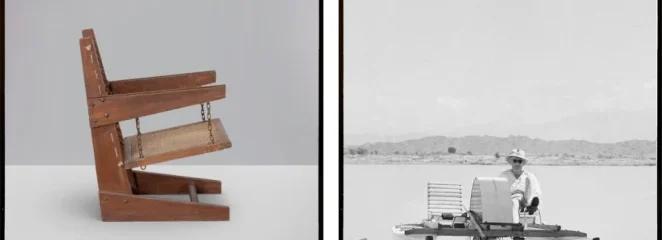
Pierre Jeanneret (1896-1967) is one of the most underestimated figures of modern architecture and furniture design of the 20th century. As the office partner and cousin of Le Corbusier, he shaped the development of modern architecture over more than three decades and created furniture designs that are now regarded as icons of 20th-century design. His late work in Chandigarh, the purpose-built capital of the Indian state of Punjab, represents the culmination of his career and documents with particular clarity his approach to linking modernism with local context and climatic conditions.

Why Blockchain Certificates for Your Design Objects

Why Blockchain Certificates for Your Design Objects

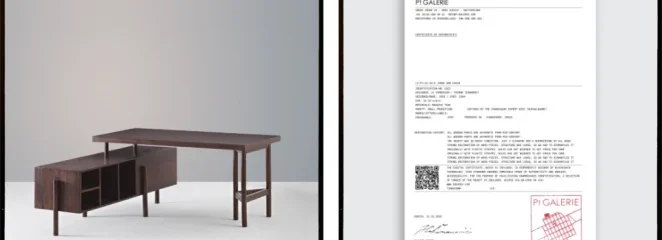
P! Galerie is introducing blockchain certificates for all its design objects. It is an authenticity certificate that provides security. It can always be verified, is indestructible, and no information can be retroactively manipulated or altered. While most physical certificates today have no photographs or only small attached photos as evidence, or could have individual details simply changed, this digital form is a guarantee. Purely physical certificates remain valid only as long as the selling gallery exists; after that, verification becomes difficult. Proving that an object is truly authentic or was sold by the said gallery becomes a laborious undertaking for descendants. Uncertainties and resulting losses in value follow from this.