News

[:en]New gallery opened with art and design[:]
Glasshouse 1 | 240m2 showroom

Glasshouse 1 | 240m2 showroom

2025 | 08 | 17


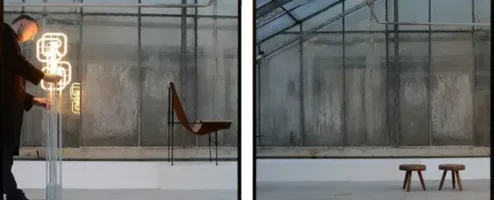
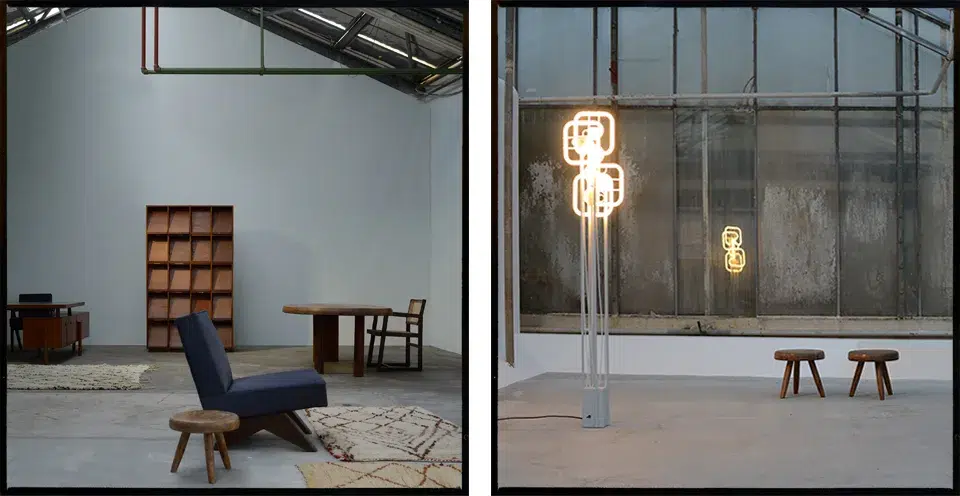
Finally, we opened our new gallery of art space in the industrial area. The glasshouse from 1956 has a great character, perfectly matching our raw objects. We have a 240m2 showroom in that fantastic space so we’re able to show you many more of our artefacts and ready to hold bigger exhibitions. We still have
our small city-centre gallery.


We are proud to open our first exhibition here. It will be "Tom Strala vs. Pierre Jeanneret". We are bringing raw design together. A selection of non-decorative design artefacts showing the essential depth of design, making the beauty of
the simplicity visible. We are looking forward to seeing you here (by appointment only).
le corbusier
Authenticity & restoration

Authenticity & restoration

2025 | 08 | 17


Authenticity:
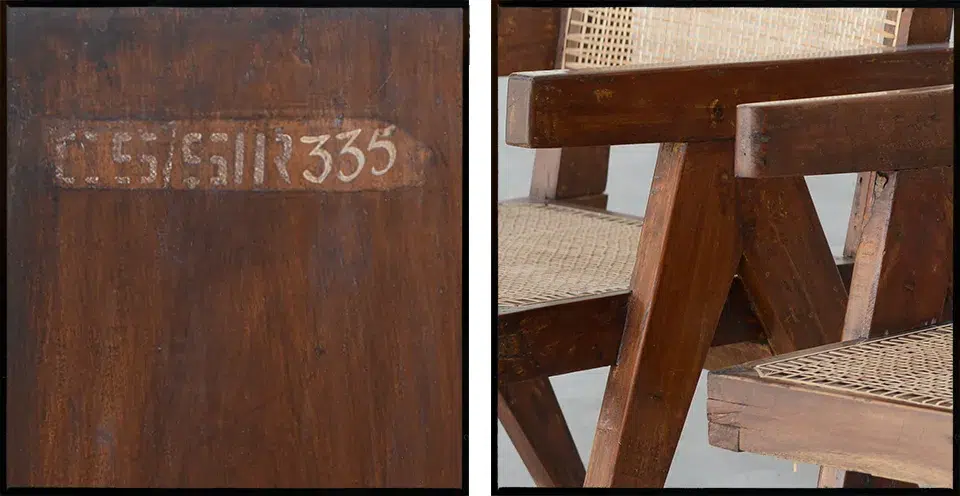
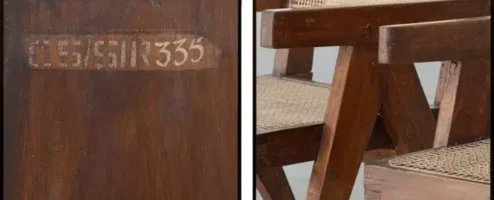
We only sell authentic Mid-Century pieces. All wooden parts are original. We don’t replace damaged parts by new ones or use other damaged Jeanneret pieces. Sometimes pieces were repaired between 1960- 1985. These already have a strong patina as part of their history. That doesn’t reduce the value, sometimes the repairs are very beautifully done, and that makes them even richer. Nevertheless, we will mention that. Pierre Jeanneret’s objects always imply a story of destruction and repairs. They illustrate a collage of history. Pedja Hadzimanovic personally picks all pieces. He only buys unrestored pieces, so all traces and important indicators of their authenticity are visible. Old cracks, many layers of scratches, old traces of worn lacquer, acid from human handling, which made some parts more oxidised and darker, are important to see.
This part is so important because in India there are no invoices and serious documents of authenticity. Serious researches about the history of provenance are difficult. So we don’t buy restored pieces because too many important indicators have already vanished and we would not be able to guarantee their authenticity. Cushions, cane, upholstery, and foam are, in most cases, redone by us. That is standard and doesn’t reduce their value. On some rare Museum-quality pieces and rare collector pieces we keep original parts. We mention that always. Sometimes we have to dismantle the objects, so we replace some inner screws with new ones. That will not be visible from outside and will give additional stability.


Restoration:
These are collector pieces, the value is defined by their authenticity. So we carry out a very gentle restoration so as not to destroy too much of it. On the other hand, we make the pieces suitable for normal use. So there is always a compromise. Some very gently-restored chairs can shake. They didn’t fall apart
in the last 50 years, so they are secure. We would mention if they shake. Nevertheless, we avoid sanding them completely and making them looking like new. That destroys their unique beauty and value. You will see holes, small cracks, old chips, irregularity, insect holes and other imperfections. Especially on the parts underneath as we don’t do anything and show their authenticity. You get photos, so you can check if you like this raw character.


Condition/ use:
Bear in mind that these are antique pieces. They are for daily use. But cane seats, in particular, are always a bit more fragile. In this case, we recommend using a cushion. Pedja Hadzimanovic personally doesn’t do that and has no problems. However, cane is fragile and it may need partial or complete replacement after several years. The wood has such a lot of patina if you add a scratch you needn’t worry. It will be one of thousands. Add a bit of polish or a drop of stain and they are gone. That makes them very easy and if something breaks, you also don’t need to worry. Bring it to a carpenter who can glue it together and with a bit of sanding and staining it becomes invisible. Continuing the history of those furniture pieces.


mid century art selling
Glasshouse 2 | additional 300m2 showroom

Glasshouse 2 | additional 300m2 showroom

2025 | 08 | 15


In 2018, we finally added our third showroom and closed our gallery in the city centre. Glasshouse I and II are now ready to welcome you. We now have around 450m2 surface area, with a capacity to have even two exhibitions simultaneously and to hold some events. We have kept the industrial character of the glasshouses, matching the raw artefacts that we have.


In 2019, we will continue with an additional alteration of glasshouse I. Solving technical problems. Then I'll be happy to connect glasshouse I and II and activate the exterior space as well. We are looking forward to a great party season. Champagne, Cognac, and Gin are waiting for you. We are looking forward to seeing you here (by appointment only).

swiss design CH-DSGN at P! Galerie
Non-Conformist Swiss Design in Muscat | CH-DSGN

Non-Conformist Swiss Design in Muscat | CH-DSGN

2025 | 08 | 15


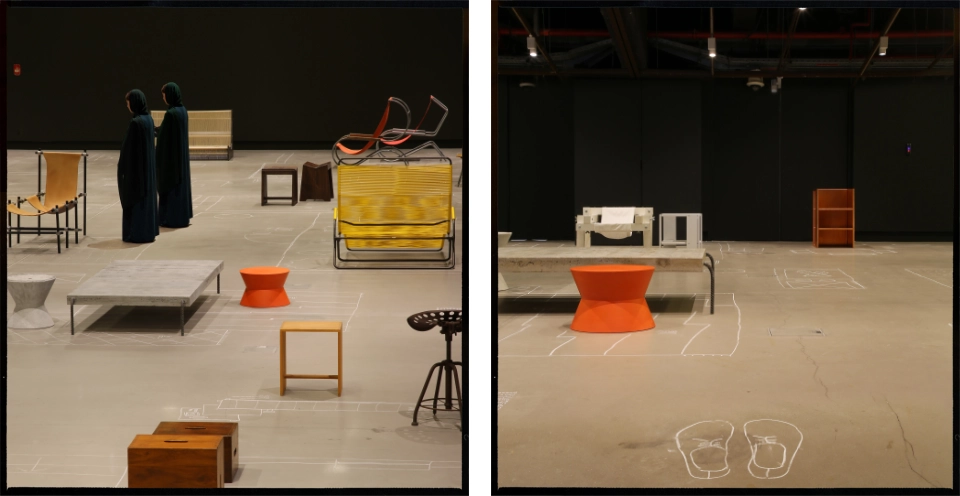
On 1 February 2023, P! GALERIE presented the exhibition of Swiss design at the National Museum of Oman, following an invitation from H.E. Jamal al-Moosawi, the Secretary General. The museum, located directly opposite the Royal Palace in Muscat, hosted the show in its central exhibition hall. The exhibition was officially opened by Sayyid Bilarab bin Haitham Al Said, the son of the Sultan. What followed was not a conventional design show, but a conceptual statement. No scenography. No event-like spectacle. Just objects on the floor.

Instead of repeating the usual narratives about “Swiss precision”, “rational intelligence” or “functionality as virtue”, the show focused on non-conformism, rawness and doubt in design. Important objects by Pierre Jeanneret and Le Corbusier from UNESCO World Heritage sites, or by Tom Strala, were placed directly on the museum floor – no plinths, no glass boxes. The exhibition ground itself became a conceptual element: a chalk-drawn layout of a virtual building – no more, no less – ephemeral and fragile. A method borrowed from Brecht’s epic theatre and later seen in Lars von Trier’s Dogville. Not projected emotions, thoughts or morality – rather a void that allows everyone to create their own perception. Because the objects stood directly on the ground, visitors were allowed to touch them. Chairs were not isolated as art objects – they remained physical, usable things. The show rejected both object fetishism and educational authority. Visitors could engage freely, without being reduced to passive observers or admirers. They were invited to question, reflect, connect.

This format avoided all decorative distraction. It was a gesture of reduction – but not minimalist in the marketable sense. It insisted on essential presence, on the sculptural truth of each object. Nothing was hidden, nothing polished. “Design is not polite,” said Pedja Hadži-Manović, who curated the exhibition. “It must be radical. It must resist the culture of compromise.”

In this spirit, the show embraced a set of works usually neglected in the Swiss canon: experimental, imperfect furniture – humble, primitive, almost childlike. A side of Swiss design that had long been ignored was made visible here. But it was precisely this aesthetic of the humble and playful that resonated with the Omani visitors, a culture where restraint and simplicity still carry meaning. Rather than preaching sustainability or morality, the exhibition created a space for reflection: on value, fragility, and the unexpected common ground between distant cultures. The layout – chalk lines slowly fading – became a silent metaphor for impermanence. What remained was clarity.

This was not a compromise.
It was a radical curatorial decision.
A non-conformist stage for objects that don’t obey.