Self-Staging Over Object | A Critical View of the Design Gallery Scene
I started trading vintage furniture in 2008. Initially Italian design of the 20th century, all still out of my own apartment. Then my interest gradually shifted toward radical design, a process that came from the gut and showed me the intensity of the objects that mattered so much to me. As an architect, I also had no real idea how to run a gallery economically, and that was for the best. It let me follow my passion, satisfy my curiosity, and focus primarily on the quality of the objects. Experience and knowledge have since accumulated, but curiosity and the fascination with quality in design remain the real drivers.
It reflects a design collector base that perceives design less as an intellectual and sensual object and more as a lifestyle product or investment. Understanding and engagement are presumably more superficial; fewer people have the time to engage with the subject, so it falls to the gallerist to make the objects palatable to the buyer. The pressure on galleries grows to optimize everything around them. The setup, the “location,” the hype around the gallerist, and the social media presence are meant to generate authority. It is no longer the objects but all of this that increasingly defines a gallery’s quality. The idea of the curator has gained importance, which shows that a gallery now defines itself by the quality of its self-staging, no longer by that of its objects.
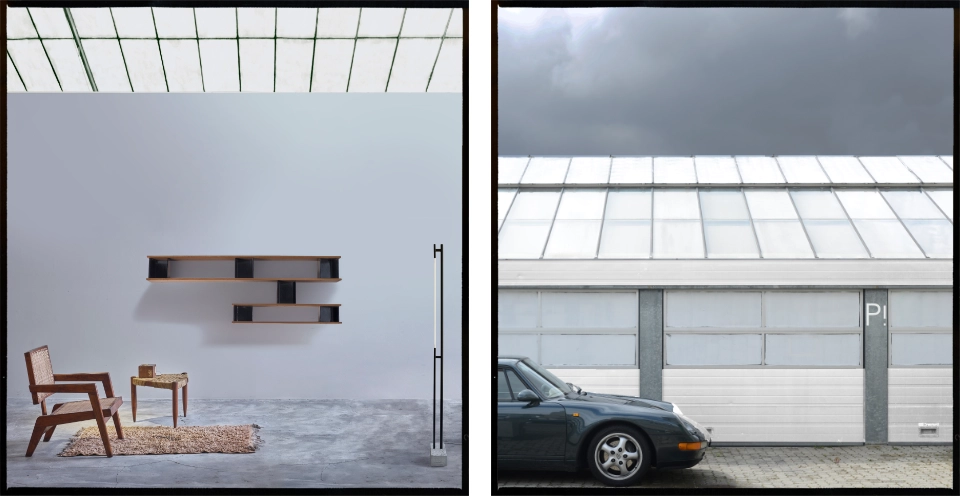
This approach is seductive and economically promising, yet for me it is a distraction from what matters. So I accept that my gallery sits in an inelegant suburb, that you enter through a garage door, that the space isn’t perfectly climate-controlled, and that the bathroom resembles one in a factory. Certain visitors are put off by it, others enjoy the unpretentiousness. We will not change this approach: we want to make clear that this is about the objects, not about a “lifestyle experience.” Bare, direct, and without chichi, our presentation is as immediate as the objects, which already speak for themselves. I am aware that good presentation and a focus on the object don’t necessarily exclude each other. But the moment staging becomes the purpose, the gallery itself becomes the product, and the design objects become mere useful tools.
[:fr]Img fr[:]